A Durbanville brief shaped by power cuts and daily use
The client was a private homeowner in Durbanville, Cape Town looking for a practical system that could carry the household through load-shedding and still make good use of daytime sunlight. The brief was straightforward: reduce reliance on the grid, keep the essential circuits running, and bring the geyser load under better control without turning the house into a major building site.
The home had the usual mix of roof space limits, a busy family routine, and the need to keep the installation neat. As with many properties in the northern suburbs, the owner was also conscious of coastal humidity and wanted equipment that would be installed cleanly and checked properly for long-term use. We took measurements on site, assessed the roof orientation, confirmed the available space for the electrical gear, and planned the layout around the home’s existing distribution board.
The project was carried out over three weeks from the first visit to final sign-off. That included the site assessment, system design, supply of equipment, mounting, electrical integration, testing and handover.
What the system needed to cover
The house needed a balanced setup rather than an oversized one. The goal was to support day-to-day living, especially lights, entertainment equipment, internet points, selected plugs and the water heating load where possible. The client also wanted the option to store daytime solar energy for use later in the evening, instead of losing that generation when no one was at home.
We designed the system around these key requirements:
- Reliable daytime generation for household use
- Battery storage for after-hours backup
- Clean integration with the existing electrical setup
- Solar water heating support to ease geyser demand
- A tidy installation that would suit a residential property in Durbanville
Because the client was in the Cape Town area, we also allowed for local weather conditions and the fact that coastal dust and airborne salt can affect exposed equipment over time. That meant careful mounting, proper cable routing and a layout that would be easier to inspect and maintain.
Equipment supplied and installed on the property
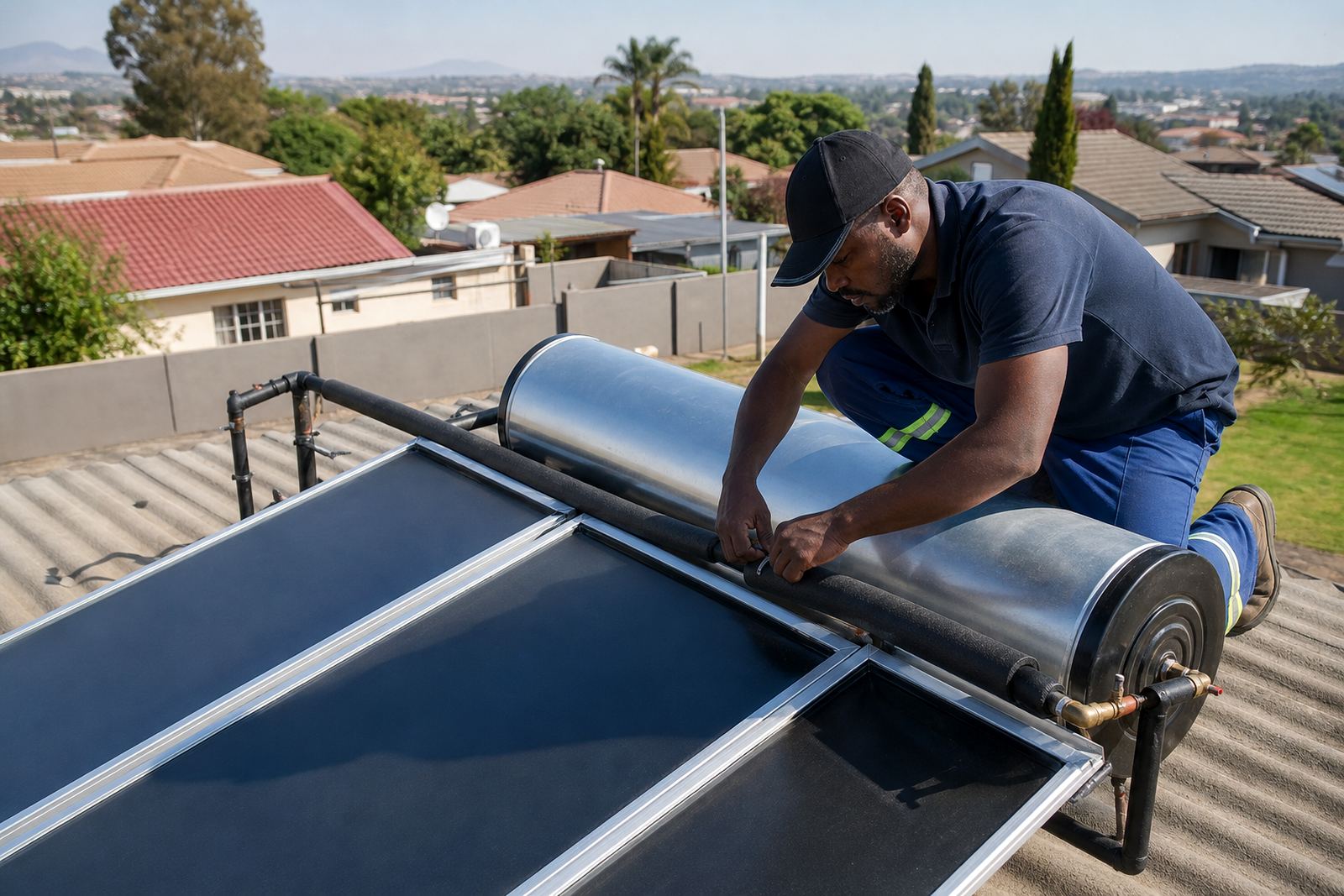
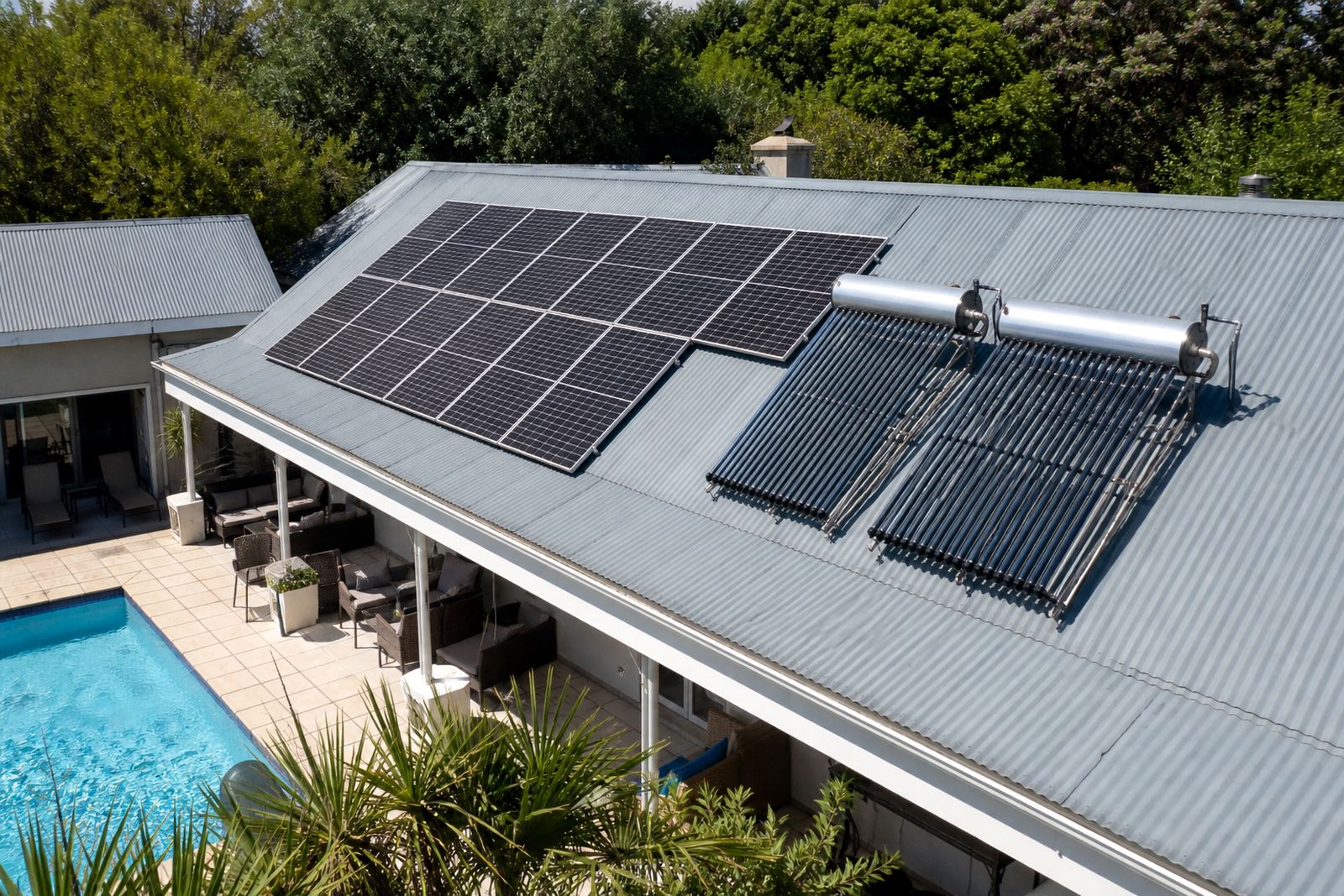
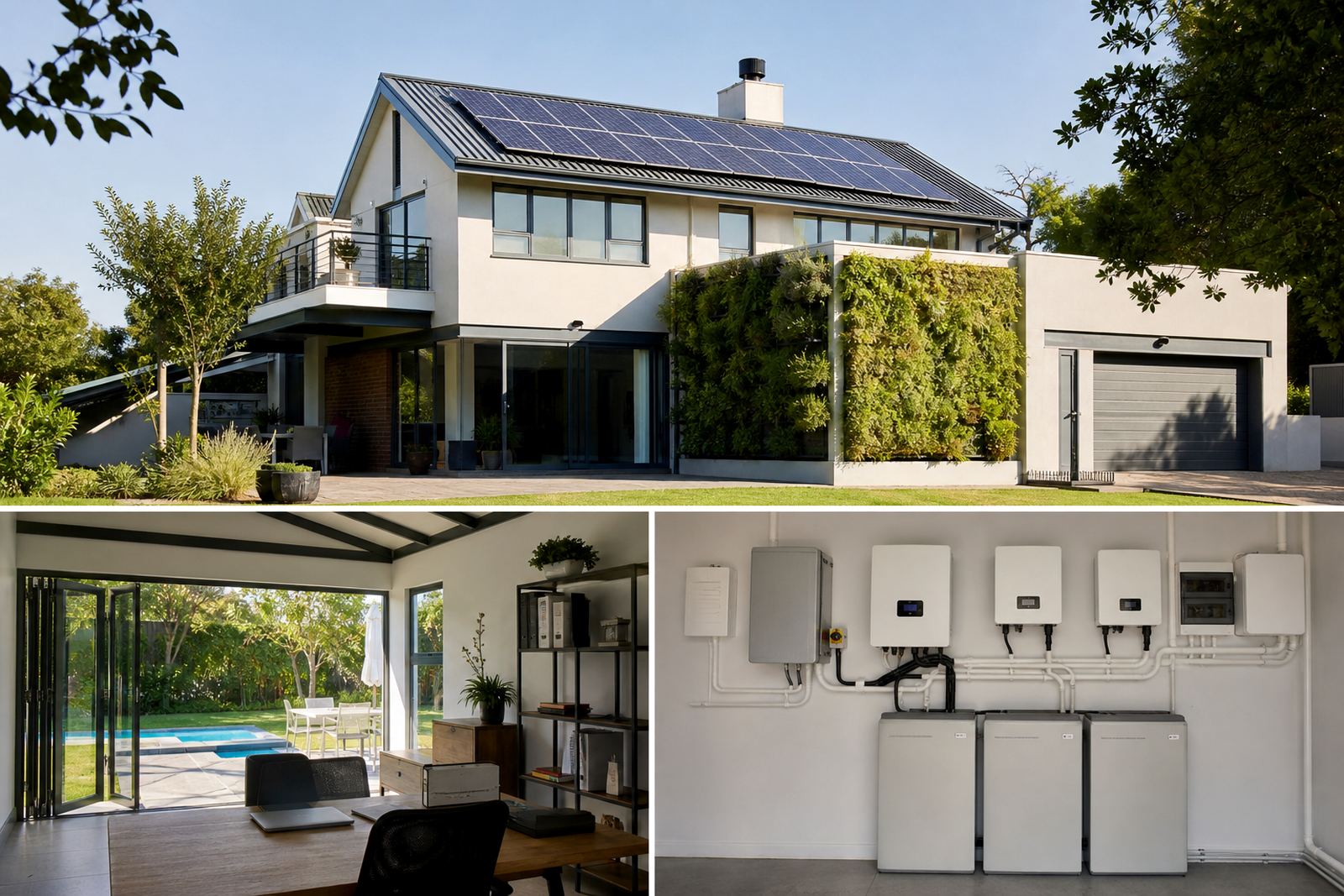
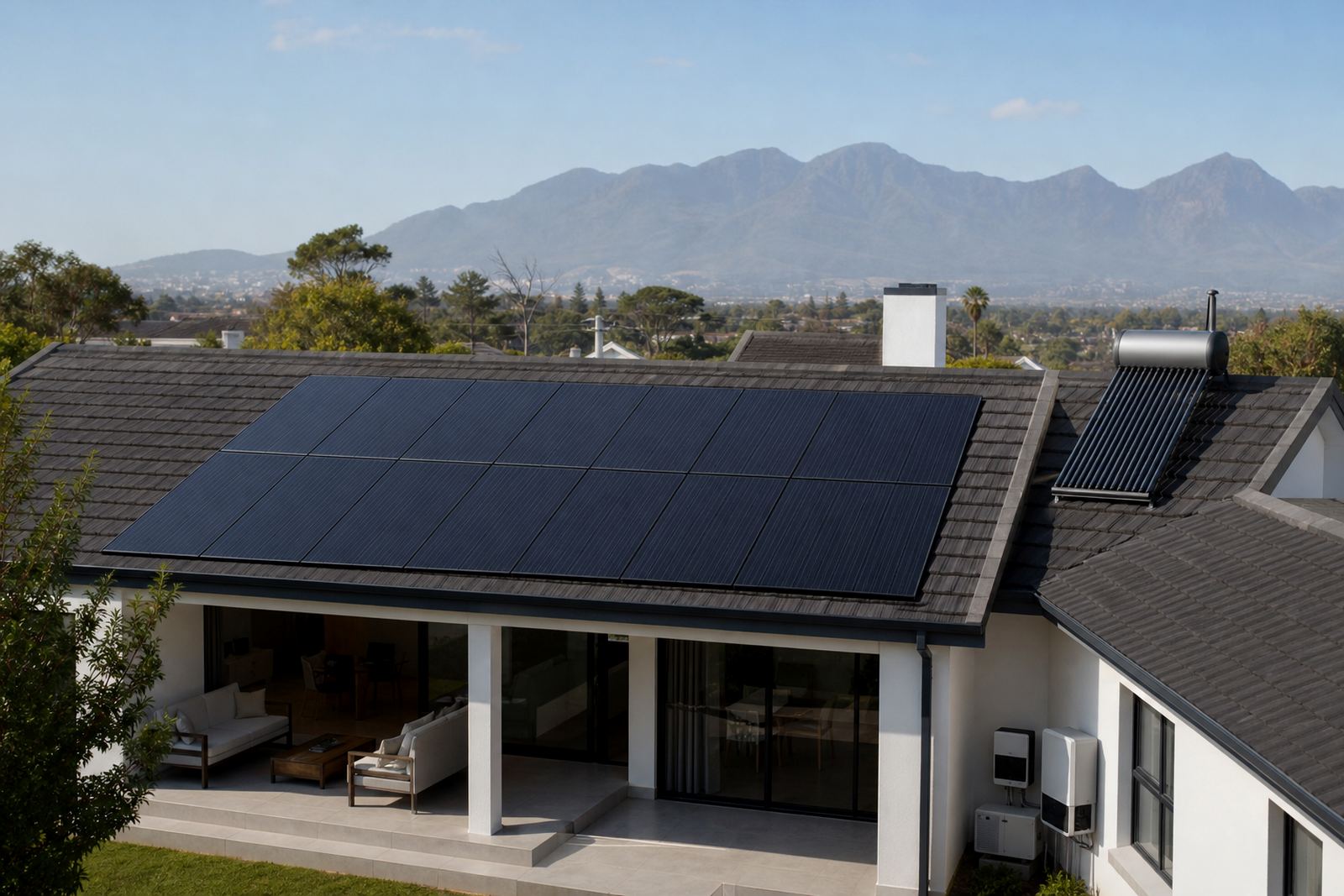
We supplied and installed a grid-interactive solar setup made up of solar panels, an inverter, battery storage and solar water heating equipment. The panels were fixed on the roof in a position that gave strong solar exposure through most of the day. The inverter was installed indoors in a practical service area, with battery storage placed where ventilation and access were both suitable.
The system used the following key components and sizes:
- Solar panels sized for a medium residential roof and daily household demand
- An inverter matched to the expected load profile and backup needs
- Battery storage sized to cover evening use and short outage periods
- Solar water heating equipment for reducing geyser draw where feasible
- Protection devices and isolators for safe operation and maintenance
Electrical integration was completed by qualified installers, with careful attention to isolation, protection and clean changeover between utility supply and backup power. The result was a practical setup that works with the house rather than against it. The install was planned so that the owner would not need to rearrange the home to make it usable.
Installation, testing and handover over three weeks
The work was completed in stages so the client could keep normal household routines going. The first stage covered the site assessment and design confirmation. The second stage involved equipment delivery, roof mounting, cable runs and positioning of the inverter and batteries. The final stage covered commissioning, fault checks and a full handover.
During commissioning we checked polarity, insulation, battery communication where relevant, charging behaviour and the changeover sequence during simulated outage conditions. The geyser related work was also verified so the hot water side was properly connected and monitored. Nothing was left to guesswork, because a home system has to behave predictably when the power goes off at night.
We also spent time showing the client how the setup should be used on a normal day and during load-shedding. That included when to expect solar input, how battery reserve should be managed, and which high-draw appliances should still be used with care. The handover was practical and direct.
What changed for the homeowner after commissioning
Once the system was live, the home had a much better fallback plan for outages and evening use. The client could rely on stored energy after sunset for key loads, while daytime solar generation helped offset household demand when the sun was available. The solar water heating component also reduced the pressure on the main electrical supply, which is useful in any home that sees a fair amount of geyser use.
The homeowner also gained better control over how power is used in the property. Instead of reacting to load-shedding at the last minute, the family could plan around the system and keep important circuits active. For a Durbanville household that needs a sensible answer to municipal interruptions and rising electricity costs, that kind of control matters more than fancy features.
In practical terms, the project gave the household a cleaner, quieter backup experience than a fuel-powered alternative and removed the stress of constant manual switching. There was no need for the family to cope with noisy equipment or regular refuelling.
Why this project worked well in Durbanville
This home suited a solar-plus-storage approach because the roof had usable exposure, the electrical layout could be integrated neatly, and the owners were ready to manage their load in a more informed way. Durbanville homes often have mixed daytime and evening usage, so battery storage makes a real difference when the sun drops and people are still at home.
For a similar property, we would still start with the same practical site and system checks:
- Start with a proper site assessment and load review
- Design around the actual household routine, not a generic template
- Place equipment where it can be inspected and serviced properly
- Keep the electrical work compliant and neat
- Make the handover simple enough for the homeowner to use confidently
That is the benefit of doing the work from Centurion and Pretoria with regular service into Cape Town and the surrounding suburbs. The process stays organised, the install remains practical, and the client gets a system that makes sense for the property. In this case, the Durbanville Home project was exactly that: well planned, well fitted and ready for the long haul.
Key facts
| Project location | Durbanville, Cape Town area |
|---|---|
| Property type | Residential home |
| System type | Solar panels with battery storage and solar water heating support |
| Work completed | Site assessment, system design, panel installation, inverter installation, battery installation, water heater installation, electrical integration and commissioning |
| Timeline | 3 weeks from assessment to handover |
| Installer note | All electrical work completed by qualified installers |