Retail Trading Needs In Parow
The client was a retail operator in Parow, Cape Town, working long trading hours and needing a solar setup that supported daytime demand without getting in the way of customers or staff. The brief was practical from the start. Keep the installation tidy, reduce pressure on grid supply during the day, and make sure the building could keep operating when load-shedding or local supply problems affected normal business. We also had to work around stock movement, delivery times and customer traffic at the entrance.
Because it was a retail space, the system had to suit a commercial schedule rather than a home. That meant careful attention to roof layout, cable routes, safe isolation points and the location of equipment so the trading floor stayed clear. The client wanted a solution that was easy to monitor, simple to service and not overcomplicated for staff on site.
- Client type: retail space with daytime trading requirements
- Town: Parow, Cape Town
- Primary goal: support trading hours and reduce interruption risk
- Site condition: active premises with limited shutdown windows
Site Checks And System Planning
We carried out a full site assessment before any equipment went up. The roof structure, available mounting area, existing distribution board arrangement and cable runs were checked on site. We also looked at the building’s daytime load pattern, which is important in retail where fridges, lighting, point of sale equipment and air movement can all draw power at different times. From there we prepared the system design and coordinated the sequence of work so the store could stay operational.
One of the main constraints was access. The work had to fit around trading hours and stock handling, with safe staging areas for materials. Parow conditions can also mean salty coastal air at certain times of year, so we selected hardware and installation methods with corrosion resistance in mind and kept all exposed fittings neat and secure. The project also needed to comply with local electrical rules, and all electrical work was done by qualified installers.
- Roof and access review completed before installation
- Electrical layout mapped to existing retail distribution points
- Work scheduled around shop hours and deliveries
- Qualified installers handled the electrical integration
What We Supplied And Installed
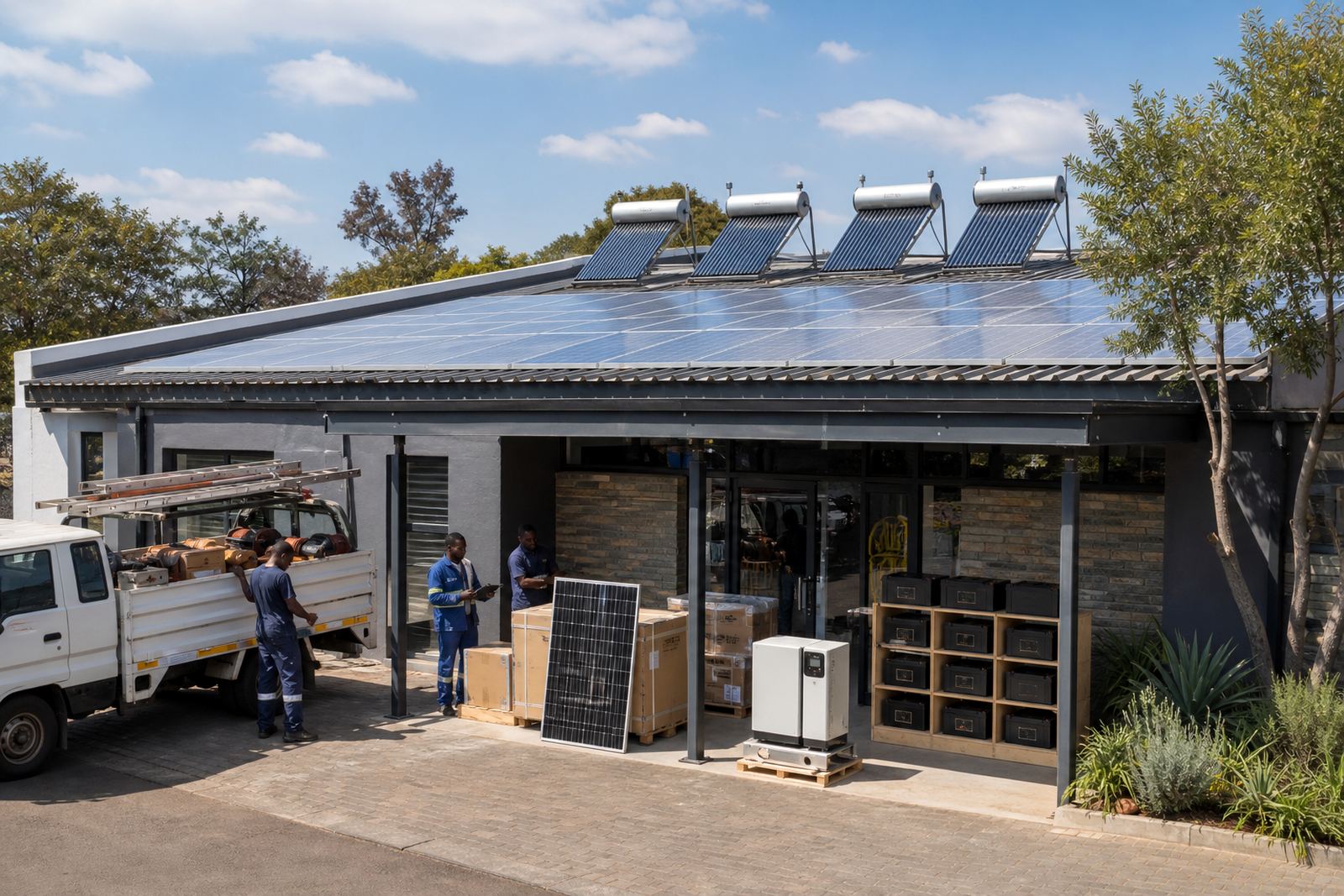
The package for this project included solar panels, inverter equipment, battery storage and the connection works needed to bring the system into service safely. For this kind of retail site, the aim is steady support for essential daytime loads and enough stored energy to bridge short interruptions. We also included the necessary protection components, mounting hardware and a clean cable route between the roof and the electrical room.
We installed the panels in a layout suited to the available roof space and positioned the inverter and batteries where they could be accessed for checks without interfering with staff movement. The system was commissioned after installation and tested under real site conditions. That included verifying changeover behaviour, confirming the monitoring points and checking that the system responded properly to the building’s load profile.
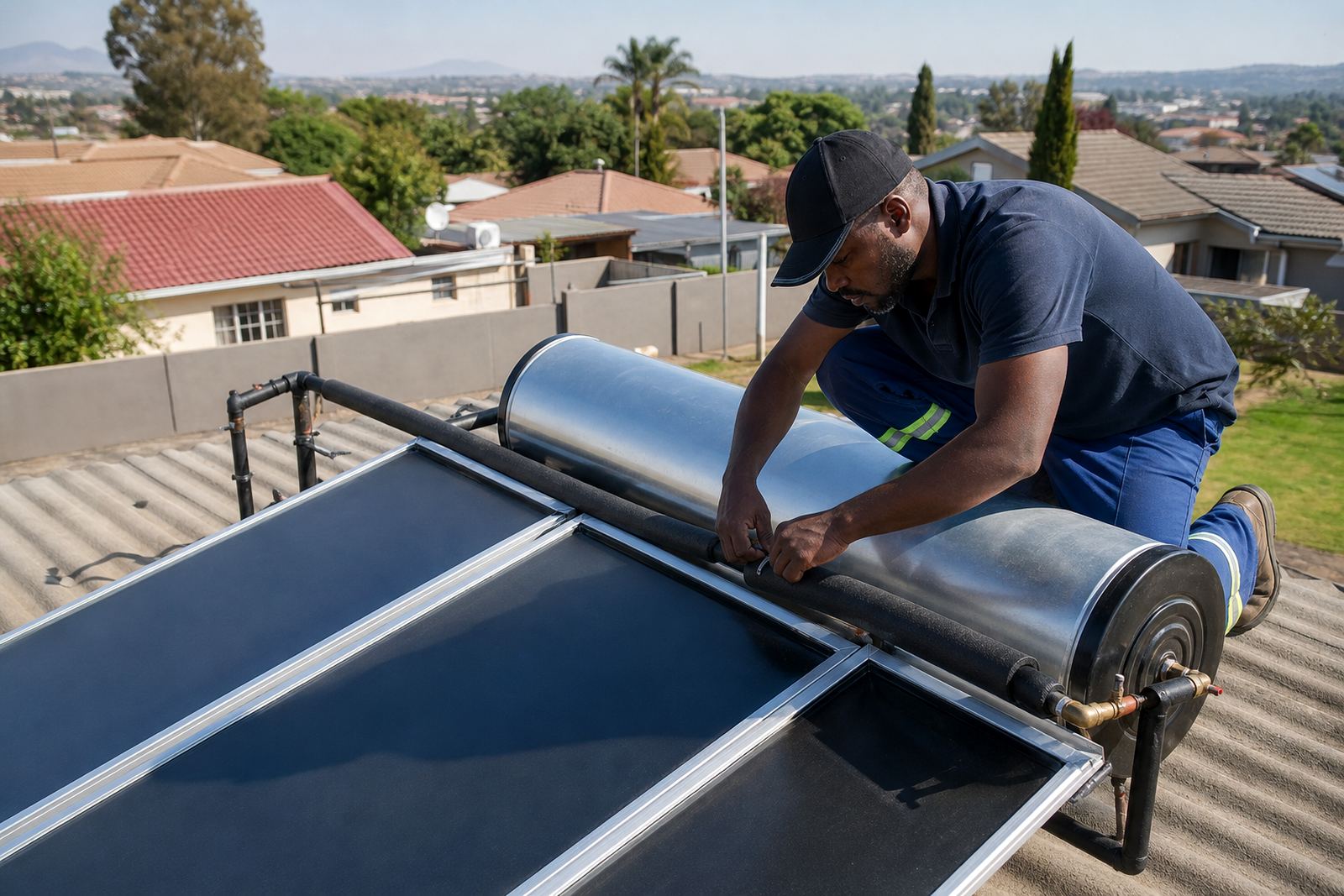
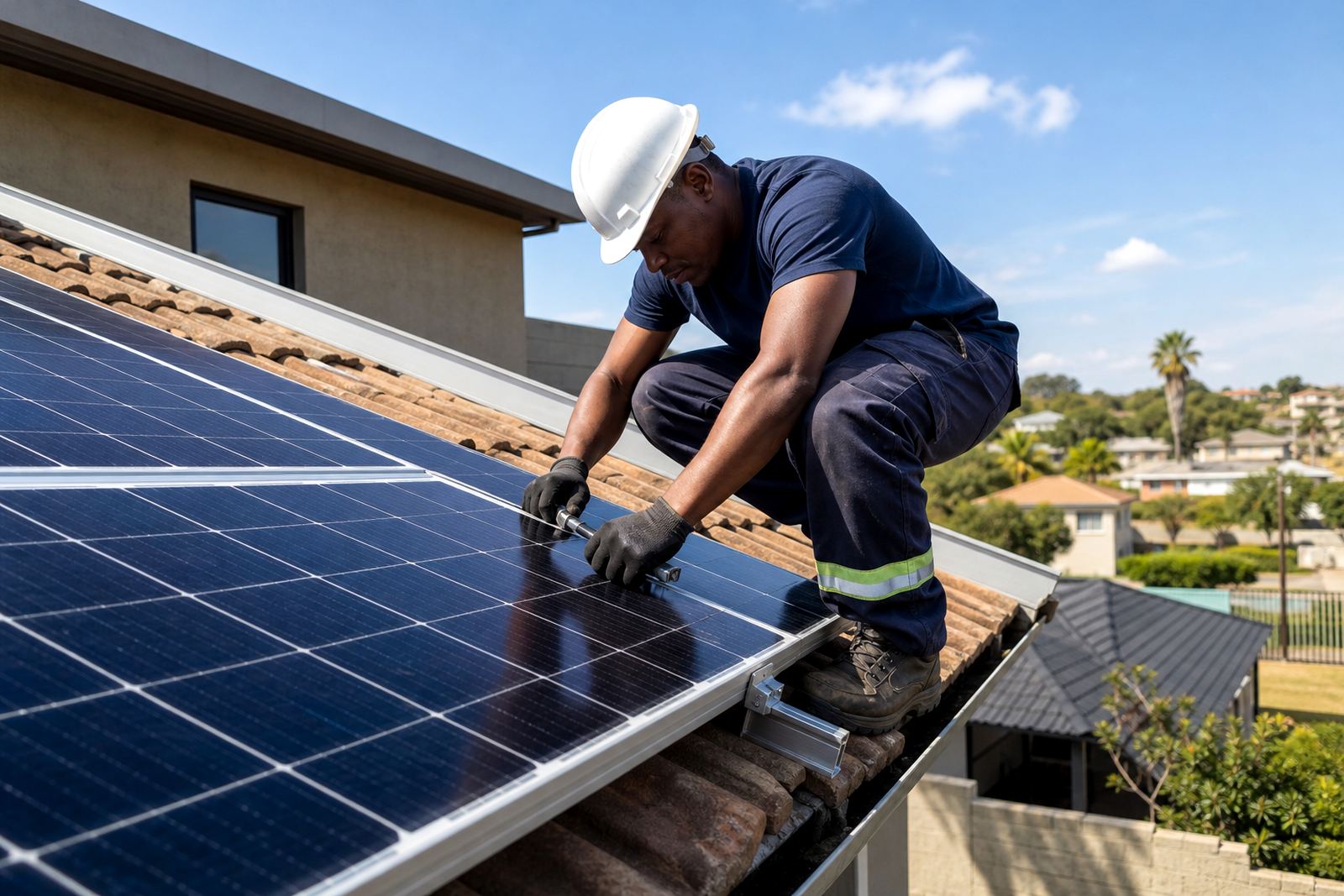
- Solar panel installation on available roof sections
- Inverter installation for power conversion and control
- Battery installation for stored backup energy
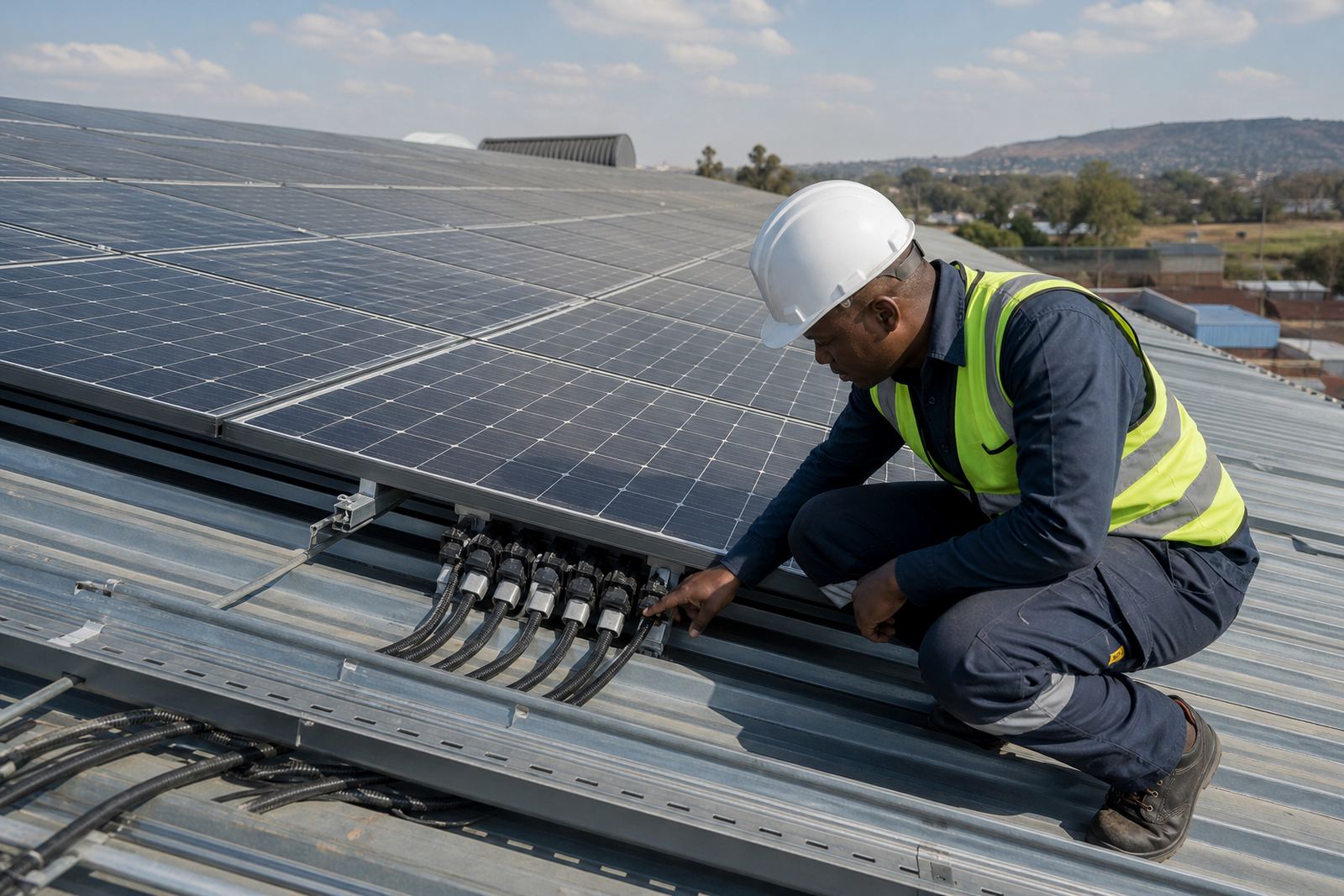
- Electrical integration into the site distribution setup
- System commissioning and functional checks
Project Timeline And Working Method
The project ran over three weeks from assessment to final commissioning. Week one covered the site visit, measurements and design work. Week two was used for delivery, mounting preparation and panel installation. Week three focused on inverter and battery placement, electrical integration, testing and handover. This staged approach kept downtime low and allowed us to work in a controlled way around the retail schedule.
Because the site was active during the day, we broke the work into short practical steps instead of doing everything at once. That helped with safety and kept the premises usable. It also made it easier to coordinate with the store team when access was needed at specific times. A retail site can change quickly during the day, so we kept communication direct and clear throughout.
- Week 1: assessment, measurements and system design
- Week 2: equipment delivery and panel mounting
- Week 3: electrical integration, testing and commissioning
- Final step: handover with operating guidance for site staff
Results For The Trading Floor
Once the system was live, the client had a practical solar support setup suited to trading hours. The building could draw on solar power during the day and use battery storage to handle interruptions more comfortably. The installation was neat, with the equipment arranged so maintenance access remained straightforward. For a retail environment, that matters because service visits should not disrupt customers or block operational space.
The client also gained a system that is easier to maintain over time. We gave guidance on routine checks, safe isolation points and when to arrange cleaning or fault finding. In dusty or coastal conditions, regular panel cleaning and periodic inspections help keep performance steady, and retail properties often benefit from a planned service schedule rather than waiting for a fault. That approach suits businesses in Gauteng and along the coast alike.
- Daytime trading support improved with solar generation
- Battery storage added backup for short interruptions
- Equipment placement kept walkways and work areas clear
- Maintenance access was planned in from the start
What We Would Repeat On Similar Retail Sites
If we were doing another retail space like this one, we would follow the same method: assess first, design around the actual load, and install in phases that respect trading hours. That approach works well for supermarkets, convenience stores, showrooms and other premises where customers are coming and going all day. It keeps the site orderly and reduces the chance of rushed decisions on installation day.
We would also keep the focus on practical details that matter in commercial spaces. That includes panel placement, cable protection, inverter access, battery ventilation and making sure qualified installers handle every electrical connection. For retail clients, the best result is usually a system that is tidy, easy to explain to staff and reliable enough to sit in the background while business carries on.
- Start with a site assessment and load review
- Plan installation around trading and delivery windows
- Keep electrical integration tidy and compliant
- Leave clear access for cleaning, service and fault finding
Linuo Solar works from Centurion, Pretoria and supports projects across South Africa, including Pretoria, Johannesburg, Durban, Cape Town and Bloemfontein.
Key facts
| Project location | Parow, Cape Town |
|---|---|
| Client type | Retail space with daytime trading requirements |
| Timeline | 3 weeks from assessment to commissioning |
| Main equipment | Solar panels, inverter, batteries and electrical integration |
| Work included | Site assessments, system design, panel installation and commissioning |
| Electrical work | Completed by qualified installers |