What is included in a panel installation
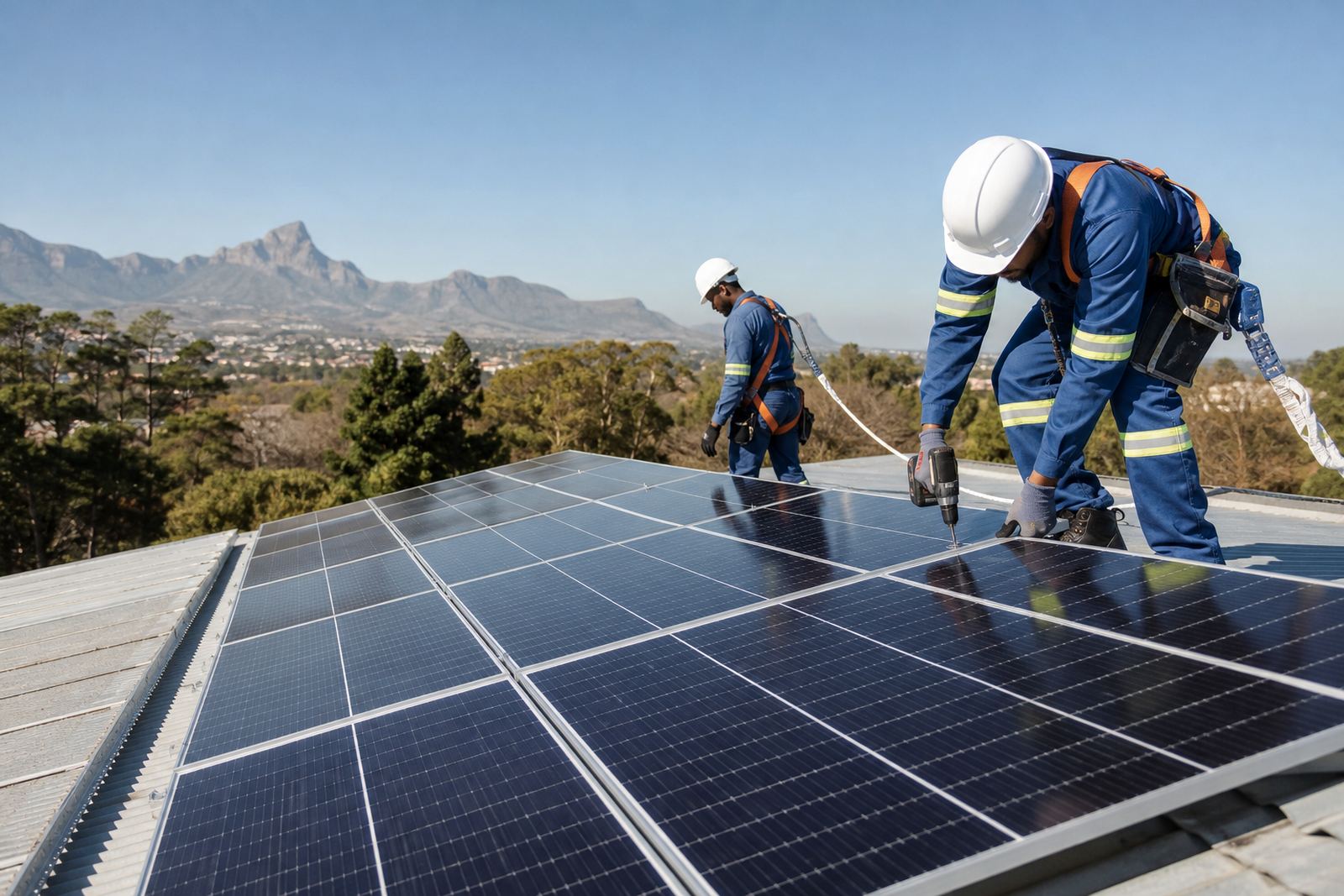
Our panel installation service covers the physical mounting of solar panels on tiled, IBR, corrugated and flat roofs, together with the rails, clamps, brackets and roof fixings needed for a secure fit. We plan the layout to suit the roof structure, shade points, wind exposure and available space, then set the panels at a practical angle for good daytime yield. On homes in Pretoria, Centurion and Midrand we often work around satellite dishes, geysers and roof valleys, while on small business sites in Johannesburg, Durban, Cape Town and Bloemfontein we also consider parapets, roof load limits and safe access routes.
The installation is more than just lifting panels onto a roof. We check spacing for airflow, allow for maintenance access, and make sure the array is fixed properly so it can handle local conditions such as summer storms, coastal humidity in Durban and regular dust build-up in Gauteng. Electrical integration is completed by qualified installers, which means the cabling, protection devices and final connections are handled properly and in line with the site requirements.
- Roof assessment and panel layout
- Rails, brackets, clamps and mounting hardware
- Secure fixing for tiled, metal and flat roofs
- Qualified electrical integration and commissioning
How we plan each roof before installation
Every site starts with a practical assessment. We look at roof pitch, orientation, shading from trees or nearby buildings, condition of the roof covering and the best position for cabling routes. In Pretoria and Johannesburg, where many roofs have a mix of ridges, valleys and water tanks, the layout has to be planned carefully to avoid unnecessary roof penetrations. On business premises, we also check whether the roof can support the intended number of panels and whether access for maintenance is safe.
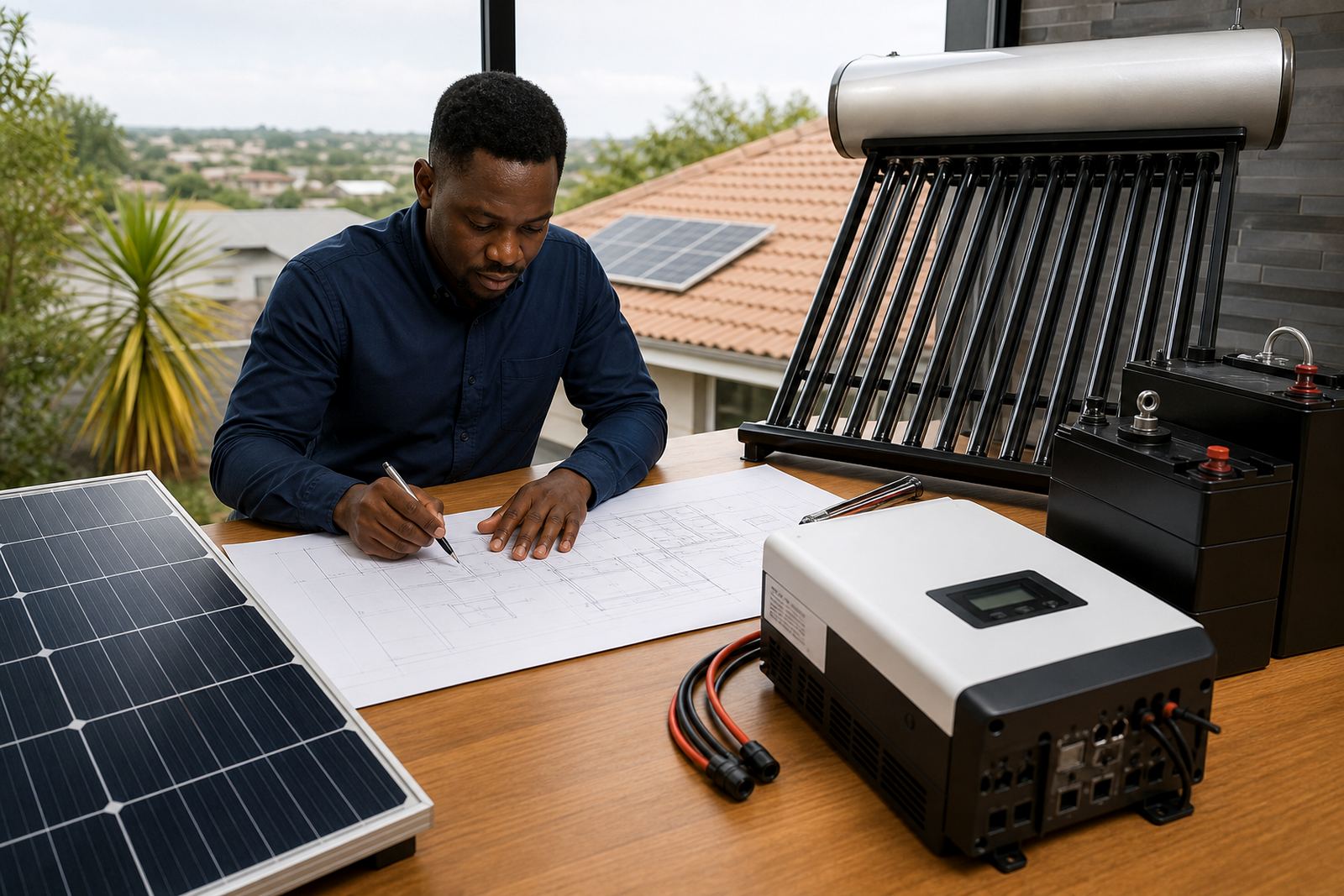
We do not fit panels by guesswork. The team sizes the array to match the available roof area and the rest of the solar system, whether the client is pairing the panels with an inverter, batteries or a solar water heater. If there are signs of weak battens, cracked tiles or old waterproofing, we flag that before work begins. That early check saves time later and helps prevent leaks or loose fixings.
- Roof condition and load checks
- Shading and orientation review
- Array sizing to suit the site
- Practical cable routing plan
Installation steps from first bracket to final test
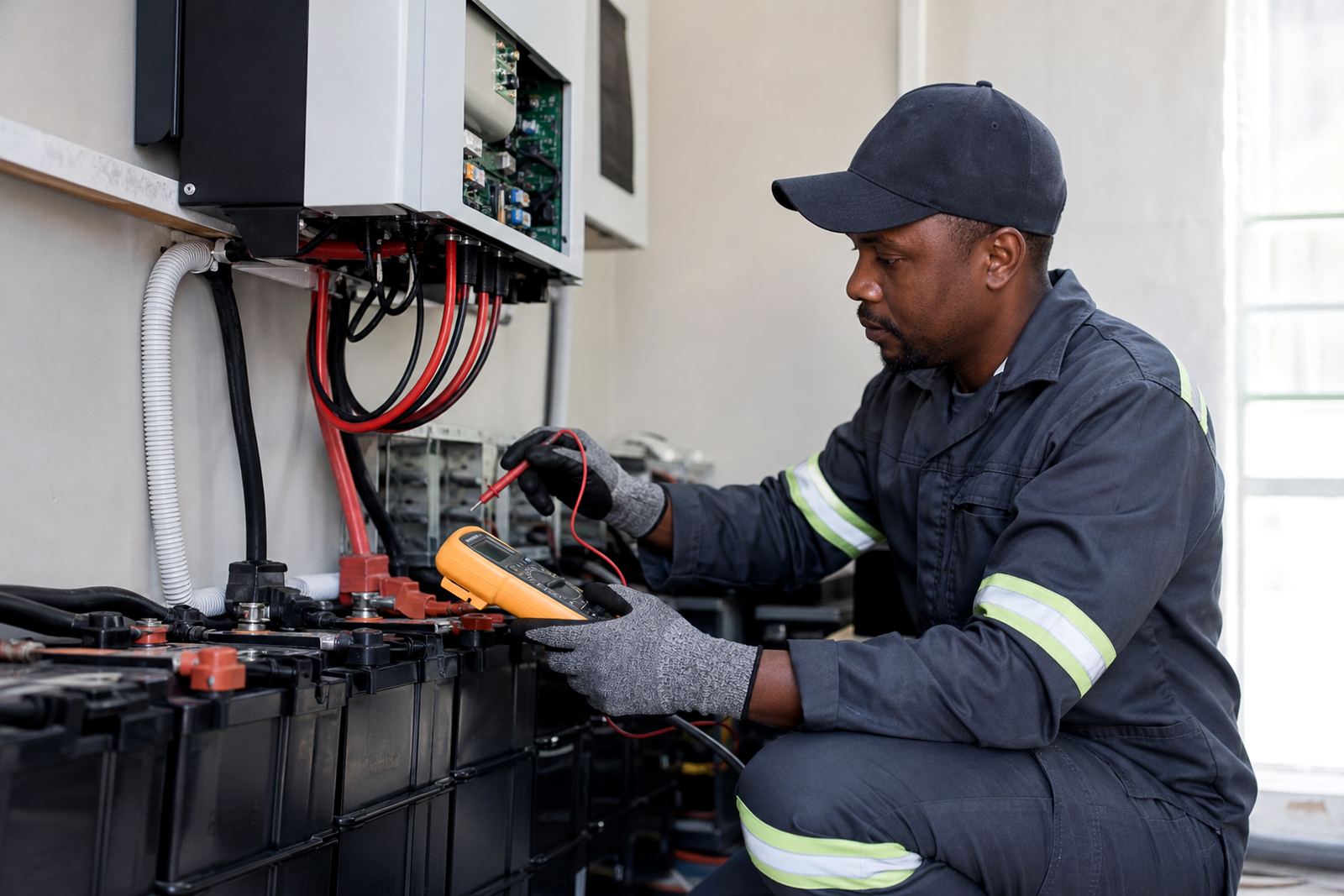
Once the layout is approved, the installation follows a clear sequence. We mark the fixing points, fit the roof hardware, secure the mounting rails and then place the panels in position. After that, the cabling is dressed neatly and taken to the inverter or control equipment. Our qualified installers complete the electrical work, carry out polarity checks and confirm that all connections are correctly terminated before the system is energised.
The final stage is commissioning. We test the panel strings, check that the system is reading correctly and confirm that the array is performing as expected. If the installation includes a hybrid system or battery backup, we also verify how the panels interact with the rest of the equipment during charge and discharge. Good commissioning matters because it shows whether the installation is safe, properly connected and ready for daily use.
- Mark and fix mounting points
- Install rails and place panels
- Run and secure cable routes
- Test, commission and hand over
Typical turnaround times and site scheduling
Turnaround depends on roof size, access and whether the property is a house, townhouse complex or business premises. A straightforward residential panel installation can often be completed within a day once the site is ready, while larger roofs or sites with extra access needs may take longer. Small business work sometimes needs to be scheduled around trading hours, security procedures or municipal rules for access and noise, especially in busy parts of Gauteng.
We always try to keep disruption low. That means planning delivery, lifting equipment and cable runs so the work moves steadily without repeated stops. Where a site is in Durban or along the coast, we may also allow extra time for weather conditions because strong wind or rain can affect safe roof work. If the property already has other solar equipment in place, we coordinate the panel installation with the rest of the system so the job is done in the right order.
For clients in Pretoria, Centurion, Johannesburg, Midrand, Cape Town, Durban and Bloemfontein, the practical timeline is discussed after the assessment so expectations are clear from the start.
Pricing approach and what affects the cost
We price panel installation based on the actual site conditions, the number of panels, roof type, mounting method and the complexity of the electrical integration. There is no one-size-fits-all figure because a flat roof with easy access is very different from a steep tiled roof with limited working space. We also factor in whether the installation is part of a new solar setup or an upgrade to existing equipment.
Our pricing approach is straightforward. We explain what is included, what hardware is required and whether any additional roof preparation is needed before work begins. If a site needs extra waterproofing around penetrations, replacement fixings or additional safety measures, that is discussed upfront. Customers appreciate knowing where the money goes, especially when they are balancing solar against other property maintenance costs and load-shedding backup needs.
- Site-specific pricing based on roof and access
- Panel count and mounting method
- Electrical integration requirements
- Any extra roof repairs or waterproofing
Maintenance after installation and when to book a check
Solar panels do not need constant attention, but they do benefit from regular checks. We normally recommend a visual inspection after severe wind, heavy rain or hail, and a more detailed maintenance check every 6 to 12 months depending on the site. In dusty areas around Pretoria and parts of Gauteng, panel cleaning may be needed more often than in cooler or wetter locations. Near the coast, salt air can also affect fixings and cable condition over time.
During a maintenance visit, we look for loose mounting hardware, dirt build-up, cracked seals, cable wear and signs of heat stress. If the array is mounted on a roof with older tiles or metal sheets, we also check for movement around the fixing points. Small issues are easier to deal with early, before they become water ingress or performance problems. We also offer support callouts and fault finding if a customer notices reduced output or visible damage.
Our team in Centurion, Pretoria keeps the process practical from the first site check to ongoing system support. Vuyo Phasha leads the business, with Naledi Kgosi, Sarel Delport, Palesa Mabena, Mothusi Mphahlele, Faatimah Latief and Unathi Tau all involved in keeping projects moving and customers informed.
Key facts
| Mounting types | Tiled roofs, metal roofs, flat roofs and suitable commercial roof structures |
|---|---|
| Typical panel sizes | Standard framed solar panels from about 1.7 m to 2.2 m long, depending on the model |
| Fixings used | Rails, mid clamps, end clamps, brackets, bolts and weather-rated roof hardware |
| Electrical work | Completed by qualified installers during integration and commissioning |
| Maintenance interval | Visual checks after storms and a service every 6 to 12 months |
| Service area | Pretoria, Centurion, Johannesburg, Midrand, Durban, Cape Town, Bloemfontein and greater Gauteng |